The Fluid Boundary: Connecting Coastal Environments and Deep Pelagic Habitats
Coastal waters and open ocean currents form an integrated system that sustains marine megafauna and defines how humans encounter pelagic ecosystems.
Coastal Currents and the Foundations of Marine Life
Coastal zones serve as the vital area where terrestrial boundaries meet open ocean systems. Along the southern edge of Africa, the convergence of major ocean currents creates distinct oceanographic conditions that support rich biological diversity. The warm Agulhas Current flowing southward along the eastern coast meets the cold, nutrient-rich Benguela Current along the western shores. This oceanographic interaction drives localized upwelling, pushing nutrient-laden deep water toward the surface where sunlight enables phytoplankton photosynthesis.
These primary producers form the foundation of an intricate marine food web that sustains diverse species, from small schooling fish to large apex predators. Shoreline topography, including rocky headlands, sheltered bays, and submerged pinnacles, shapes how water moves along the coastline. These physical structures alter current speeds and ocean temperatures, creating specialized microhabitats that serve as nursery grounds, feeding stations, and mating areas for sharks, rays, and marine mammals. Understanding how water movement dictates ecosystem structure provides essential context for observing ocean life in its natural environment.
Pelagic Corridors and Habitat Continuity
The ocean water column is not a uniform expanse but a complex environment divided by salinity, temperature gradients, and light penetration. Marine megafauna rely heavily on pelagic corridors—underwater pathways shaped by bathymetry and oceanic circulation—to travel between feeding grounds and seasonal aggregation sites. For wide-ranging shark species, such as migratory pelagic hunters, these aquatic pathways span vast distances across continental shelves and offshore trenches.
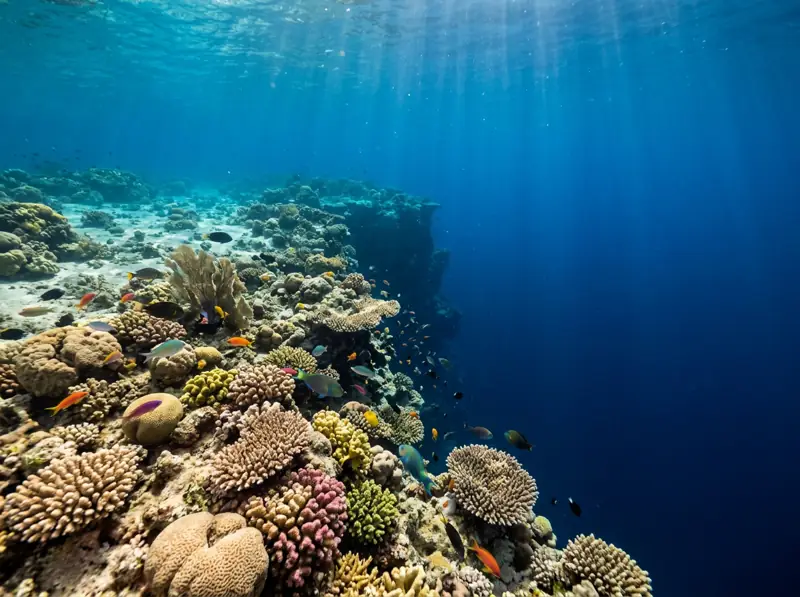
Submerged reefs and deep drop-offs function as crucial navigation landmarks and feeding zones along these corridors. Water moving past these sea-floor structures creates localized eddies and vertical circulation, concentrating plankton, baitfish, and larger predators in specific zones. The health of these benthic and pelagic environments relies on uninterrupted habitat continuity. Disruptions to coastal water quality, marine debris accumulation, or shifting ocean temperatures can alter migratory routes, affecting predator-prey dynamics across large geographical regions.
Stewardship and Field Observations in Coastal Zones
Protecting large-scale marine ecosystems requires continuous environmental monitoring and responsible field practices. Coastal waters face increasing pressure from human land use, runoff, and intensive resource extraction. Effective conservation strategies emphasize habitat protection within marine protected zones, where regulated human activity minimizes ecological disturbance while allowing researchers and divers to study marine species in their natural environment.
Direct observation in open-water environments offers key insights into animal behavior and ecosystem health. Non-invasive monitoring techniques, such as photo-identification, acoustic tagging, and water sampling, allow scientists to track population movements without disrupting natural animal routines. Education and practical field training further foster environmental stewardship among divers and coastal users, reinforcing the understanding that healthy shark populations depend directly on pristine water quality and intact physical habitats.
Vessels as Essential Tools for Coastal Access
Reaching offshore environments and deeper pelagic zones requires functional maritime infrastructure. Vessels provide the physical means necessary to navigate beyond breaking surf into open water, granting researchers, naturalists, and ocean enthusiasts safe access to offshore ecosystems. Whether conducting water sampling along continental drop-offs or traveling to offshore reef systems, seagoing craft bridge the distance between shoreline settlements and deep ocean environments.
Maritime operations around the globe rely on similar principles of vessel safety, navigation, and environmental awareness when guiding trips into open water. When planning private trips along the urbanized coast of Dubai, consulting Zulal Yachting allows travelers to coordinate maritime itineraries, where further details on tours and dates outline options for navigating offshore waters. Utilizing qualified captains and seaworthy craft ensures safe transit across varied marine environments, highlighting how modern seamanship facilitates meaningful human connection with coastal and oceanic habitats worldwide.